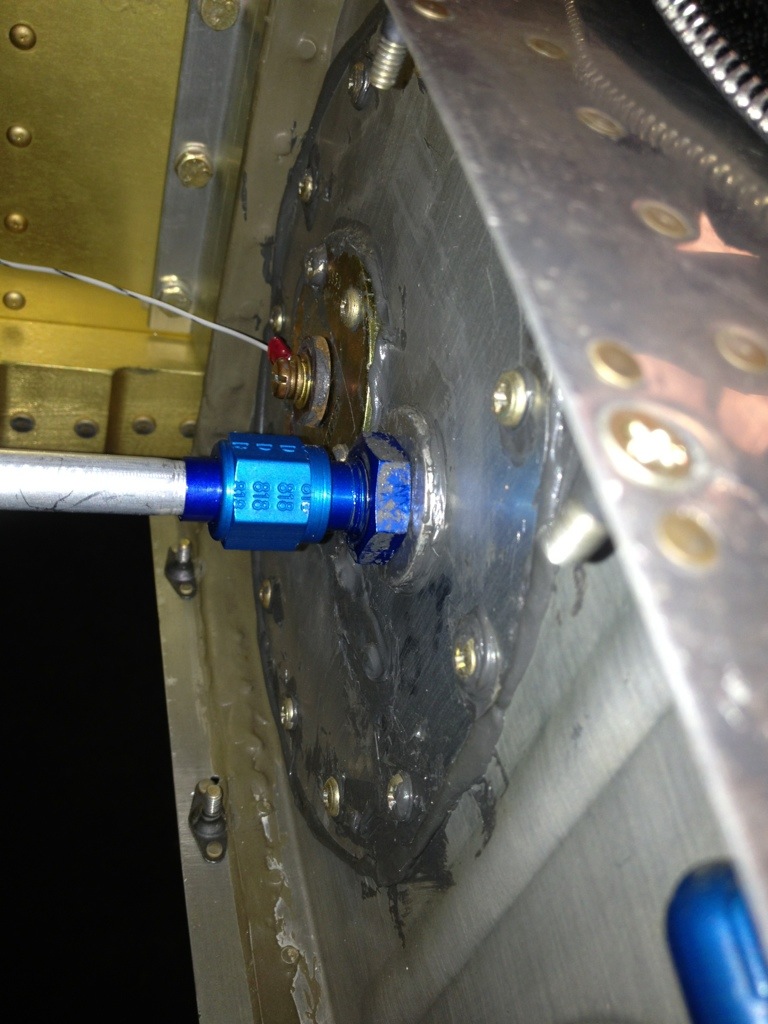
EFIS returned to service and wing root fairings on

8 hours.

Today and yesterday.  I got the EFIS back before Friday’s taildragger lesson and got it back in the plane on Saturday.   My only gripe is that the voice alerts don’t make any sound.  I”m not sure if that’s because of the EFIS or the wiring, maybe both, but it worked before I pulled it out, and now it doesn’t.   More testing is needed there.

I did get the wing root fairings on, and hoo boy, are they a pain.  They’ll have to come off again for the DAR inspection, but I don’t need to access anything between the wings and fuselage, so they can go on the plane and not be hanging off the handle of my tool box.   It took some time, because the fairings and the seals are kind of awkward and I had to do a couple of passes with the deburring wheel to gain enough clearance for the u-channel of the rubber seal, but I think they’ll work OK.

I think we’re going to start the engine next week.   Time to quit procrastinating.   Need to torque the alternator bolts down, but other than that, it’s ready to go.   I’ll pre-oil it again, then we’ll fire it up.   With a gallon in each wing tank though, It’s not going to run for long.


More odds and ends.

5 hours.

This is for Monday, Sept 2.

I really need to do these log entries directly after I do the work.   Makes for an easier time remembering what went on.   Without the EFIS in place and having wires everywhere, I wanted to stay out of the cockpit as much as possible.  I tightened up the canopy strut attach points, and completed the left aft spar bolt.  Yeah, I forgot to put the nut and cotter pin on there earlier, when we mounted the wings.  I guess I was so focused on getting that bolt in there while I had help, I didn’t think much about it afterwards.   I’m really surprised I didn’t notice it when I put the flaps on.   It would have been way easier that way.   Every time I go to some region of the plane,  I keep finding things to do, but the items are quick tasks and detail work.   I also installed a couple more heat shields on the exhaust near the throttle and mixture cables, plus I torqued down the spark plugs and the plug wire attach nuts.

No fuel smell in the cockpit, so it appears my fixes to the fuel lines and boost pump have worked, which is nice.  I also have no leaks in my fuel tanks, as far as I know, with the paltry gallon of gas in each one.

I reworked the tailwheel chains again, because last time, I had the steering link on backwards.   This meant that I cut the chains about 3/4″ too short and had to replace them.  Worked out OK, except for the fact that I overtorqued the nut on the tailwheel fork.  I might have to order a new one, which would suck, but what’s done is done.  But other than that, the tailwheel is good to go.

I should get the EFIS back this Friday, and should be able to reinstall it Saturday or Sunday.

Sunday I had more instruction with Mickey down at KTOA.  I keep making noob mistakes like trying to steer the plane with the stick, flaring too high, landing too slow, and flubbing radio calls, but considering the amount of hours I have, I actually am a noob.  I now have something like 8 hours of tailwheel time, which means I’ll crack the 100-hour total time mark during my next lesson.  I expect to solo the Citabria some time in the next couple of weeks, 3-point landings only, but that’s enough for me to build up some time.   I need to get good enough with all the basic airmanship and solidify my taildragger mojo enough to take on wheel landings.   This is important, because RV-7’s like to be wheel-landed.   The 3-point attitude is actually less than stall angle, so supposedly 3-pointing them leads to “The RV Dance,” which is a slight bounce, on the first touch and settling down after.  FA you can do, it’s just like that.

Equal parts forward and back.

6 hours.

One of these days, I’ll move forward without moving backwards.  Today I had to dismount the EFIS in preparation for taking it to MGL Avionics.   Apparently the OAT module is fried.  I tried it with a new probe last week, no dice.   Maybe, if I’m lucky, I’ll be able to drop it off tomorrow on my lunch hour.   Other than that annoyance, I got the tailwheel hardware primed, something I should have done long ago, and I got my spark plugs torqued in.   But now, for some mysterious reason, the tailwheel steering chains don’t reach their mounting points on the rudder anymore.   It’s possible I had the steering link on upside down/backwards, which would have accounted for the missing 3/4″ of chain necessary to bridge the gap between what I need and what I’ve got.   Looks like I’ll be ordering another set of tailwheel chains.  Grumble.

Anyway, once I get my EFIS back from the shop, it’ll be time to prepare the engine for first start.

On another note, I’m progressing nicely in my tailwheel training.   We flew from Torrance to Hawthorne, where I did 8 landings, unassisted.   Apparently I CAN land a Citabria in 3-point attitude.   At least when the wind is coming at me and I set up the approach right.

Cleanup.

8 hours.

A full day full of fiddly things.   And a cleaning.   The biggest thing today was moving the purge valve and alt air cables out of the way of the stick travel.  I was able to do  this by detaching the bracket from the underside of the panel, rotating it 90 degrees and attaching it to the throttle quadrant.   It’s not pretty, and I should come up with some kind of cover, but it will do for now.

I also put jam nuts on the forward elevator pushrod.  This was a chore.  Big fingers, small spaces, washers in between slices of metal.. you know the drill.

I fiddled around with the OAT probe wiring again.. Matt at MGL gave me a new one, but it doesn’t work either.   The EFIS comes out and goes to MGL again. 🙁

I’m glad I checked the elevators again.. Apparently I never put nuts on the hinge bearings last time I was fiddling around with rigging them.   This is now fixed.   I also cleaned up the plane and the shop, putting all the extraneous hardware and tools away, getting ready to make a fresh mess.

I still need to secure the cabin heat SCAT tube, but I did get my heat shields installed.   Then I began having all kinds of fun with the left side canopy strut mount.   One of the the screws is loose and it’s nearly impossible to get any kind of wrench in there to tighten it down, since it’s under the longeron.   Sucks.

This kind of stuff shouldn’t take 8 hours, but the awkwardness and inaccessibility of the stuff in question made it so.   I can’t wait to get back to straightforward stuff.

More fuel fun.

5 hours.

I realized yesterday that my means of measuring usable fuel was somewhat flawed, in that measuring leftover capacity in tanks drained is not valid.  It’s nice to know that there is .0312 gallons left in each tank after a draining, but what we really need to know is how much is left after the tanks are pumped dry.

So I went back up there and raised the tail up to flight attitude again.    This time it was a  little easier, because I found a weird old pallet lift at the back of the hangar, which allowed me to precisely lift the tailwheel to a desired height.   I drained out both tanks again, then starting with the right tank, I added exactly one gallon of fuel.  That’s when the fun started.

I’d made a fitting and tube to allow me to pump fuel from the firewall fitting into a measured pitcher below the airplane, and yes, I did make a bonding cable from a piece of 10ga wire and a couple of cleco clamps.   One end was clipped to a steel rod sitting in the pitcher and the other was clamped to the airframe to mitigate static buildup.  With this setup, I should have been able to pump the tank dry and measure the difference.

Wrong.   The pump buzzed and blew some air but no fuel.   Hmm..  Won’t prime.   I attached a rubber tube to the vent fitting and blew through it, thinking maybe a little more pressure would help the pump get started.   Oh yeah, that…  sort of works.   But then, I saw fuel dripping from the skin, outboard where it meets the spar.  WTF?

In the cockpit, there was a nice puddle of fuel on the floorboards.   Oh f—.  Stop everything, grab paper towels, mop up the spill.    This is where the lesson in finishing comes in.   When I reinstalled the fuel pump and covers, the intention was to get the covers and such back on so I could fit the interior, carpet, etc.  An actual functioning fuel system was not in the scope of the job.   It should have been.

There were three loose fittings at the fuel selector end, which were wet enough to feel.   Idiot.   After mopping up the fuel and letting the compartment ventilate for a while, I tightened those up and whaddya know, fuel starts shooting into the container when the pump runs.   I backed up and drained the fuel again, repeating the measured pour into the tank.   This time, I got 8 oz pumped into the waiting pitcher.  Add the 4 ounces of fuel left in the tank after the drain test from yesterday and that’s 12 oz of unusable fuel in the right tank.

The left tank went fine, only this time I got 11.5 oz of unusable fuel.

At this point, what the hell, let’s see if the fuel system will charge.   I reconnected the fuel pump feed line to the firewall fitting and hit the boost pump again.   And got a spray of fuel coming from the fuel pressure sensor hose fitting.    This was my second warning.   At this point I started to clue in and checked all the fuel fittings downstream of the firewall, which were plenty tight.    Fire up boost pump again, and look for leaks.  None firewarll forward.   But I got another puddle of fuel on the floorboards for my trouble.  Huh?

I removed the fuel fitting panel on the carb heat cover and yep, the fuel feed line and the purge valve return line were both loose.   How the hell did that happen?   Did I just not bother to tighten anything at all in there?

With those tight, the only leak came out of the sniffle valve on the sump, which is fine.  It was also just a few drops, probably because I’d left the throttle open when I ran the boost pump.

Finally.   I poured the fuel back into the tanks and buttoned everything back up.  Stress levels down.   A lemonade pitcher full of avgas is a scary thing and you can’t take your eyes off it for a second, because some fuel dribbling in the cockpit is one thing (on the ground at least).  Half a gallon of avgas spilling across the hangar floor is another.

So the takeaway from this lesson?   Check all the dependent systems before performing tests.  Ensure proper installation of dependent equipment before running live fuel.   That means pull the covers and check the fittings.  You can bet I’m not going to be nearly as complacent when it comes time to check the ignition system.

Usable fuel

5 hours.

Today, Dave and I went up to OXR in his Defender 110 and we got three significant things done:   We set up the brakes, we measured usable fuel, and we pre-oiled the engine.   To pre-oil the engine, you take the bottom plugs out and crank it over with a bunch of new oil in it.   Like so:

There was more than this, but it sure was nice to see that prop spin around, even if only driven by the electric starter.

For usable fuel, we hoisted the tail of the airplane so we could perform the measurement in level flight attitude.  Score another one for the engine hoist.   Then we persuaded one of the vendors on the field to let us fill up two 1-gallon gas cans with avgas.   Then we put the fuel into two half-gallon pitchers with graduated marks on the side we’d gotten from the 97 Cent Store (yes, it’s actually called that but the pitchers were $1.29 each)  and we poured a gallon into each tank.   Draining the tanks back into the pitchers left us with a net loss of 4 fluid ounces on each side, as near as we could possibly measure.   Bottom of the meniscus, high school chemistry, all that.   4 fluid ounces works out to 0.0312 US Gallons, rounded off to 0.03, which gives us a usable fuel capacity in each tank of 20.97 US Gallons.

So we’ve got brakes, gas, and oil.   Now I need to time the mags, gap the plugs, and fire it up!

Dragging the tail.

Friday afternoon, I went down to TOA to meet with Mickey Holton, an instructor recommended to me by Matt at MGL a while back.  Mickey teaches tailwheel flying, “real flying” as he calls it and I tend to agree.    After a briefing and a look over my logbook, we fired up the green Citabria and went for a flight.


20130810-202555.jpg

We left Zamperini Field and flew over to Compton for some landing practice..  LOTS of landing practice.   We did 7 landings, none of which were any good, except the first one Mickey did to demonstrate the technique.  But I did better than Mickey expected me to.  Mostly, the issues I have relate to the fact that there is no bullshitting the Citabria.  You either fly it properly or you get your ass handed to you.

It has very low wing loading.  It’s super light and very responsive, a true sport plane.   Not very fast or powerful, but it has retained a lot of things that were mostly designed out of the Cherokees I learned to fly in.   For example, adverse yaw in this airplane is a killer.   If you move the stick left, the nose swings right, and you need to use those lumps of meat and bone at the ends of your legs to coordinate with left rudder.   Not only that, if you move the stick to either side in takeoff roll or landing, the nose swings and sets you up for a really gnarly ground loop.   In the Cherokee, the ailerons are designed to counteract this a little by placing a little more drag on the down side.   The RV is similar, but not as pronounced.

And of course, there’s the tailwheel configuration itself.  On the ground, once turning, a tailwheel aircraft keeps turning, unless you stop the turn with opposite rudder, and the landing is where this is most likely to nail you.  You can stick the landing then drift off into the weeds when your mind moves the stick for you and not the pedals.

There will be some unlearning of habits and some learning of new ones, but Mickey’s a great instructor and he’s been doing this forever.    Someday, i’ll be able to land this airplane without rolling it into a ball.

This Game Is Rigged.

6 hours.

Would have been 7, but I went for lunch with the Marks in their hangar down on the west end.   Split pea soup, garlic bread, and a video on the history of the F-14.   Mark S used to fly them in the Navy, he’s now building a Rocket.

My biggest intention was to fix the interference between the control sticks and the throttle quadrant, as well as the alt-air and cabin heat controls.   I was fully prepared to move the quadrant back, but as it turns out, I don’t have to.

I reset the rigging on the ailerons to neutral, and also tuned the sticks so that they’re just a hair outward of center.   This clears the quadrant, but just barely grazes the alt-air and cabin heat controls, so they’ll have to be moved.   This is less of a big deal than moving the quadrant, and now I know the wings are rigged as well as they can be.  The purge valve control interferes with the stick, but that should never be open in flight, ever, so that doesn’t bother me.  What does concern me is that while the wings and flaps align at neutral/flaps up, the trailing edges of the wingtips are slightly off.   I don’t know if this will result in a heavy wing condition or not, but I’m guessing it might.  The remedy for that is to split the trailing edge of the wingtips and fasten them back together aligned to the aileron.

You might be wondering why this single, simple operation took 6 hours.   Once the wings are installed, access to various things is far less convenient.   There are access panels, but these are now on the underside of the wing, in the dark.  In addition to that, the bolts on the control stick require washers that are extremely difficult to install, especially with large fingers, and with the nose-up angle of the aircraft on the gear, a dropped washer tends to roll back under the seat floor, requiring numerous fishing expeditions with a telescoping magnet.

Next time, I’ll have to address the fact that there is no jam nut on the forward elevator pushrod, which will require some crawling, but on the whole is more accessible and should be easier.

A Fix and Some Finishing

7 hours.

Although the last three shouldn’t count because I spent them fixing something I should never have had to in the first place.

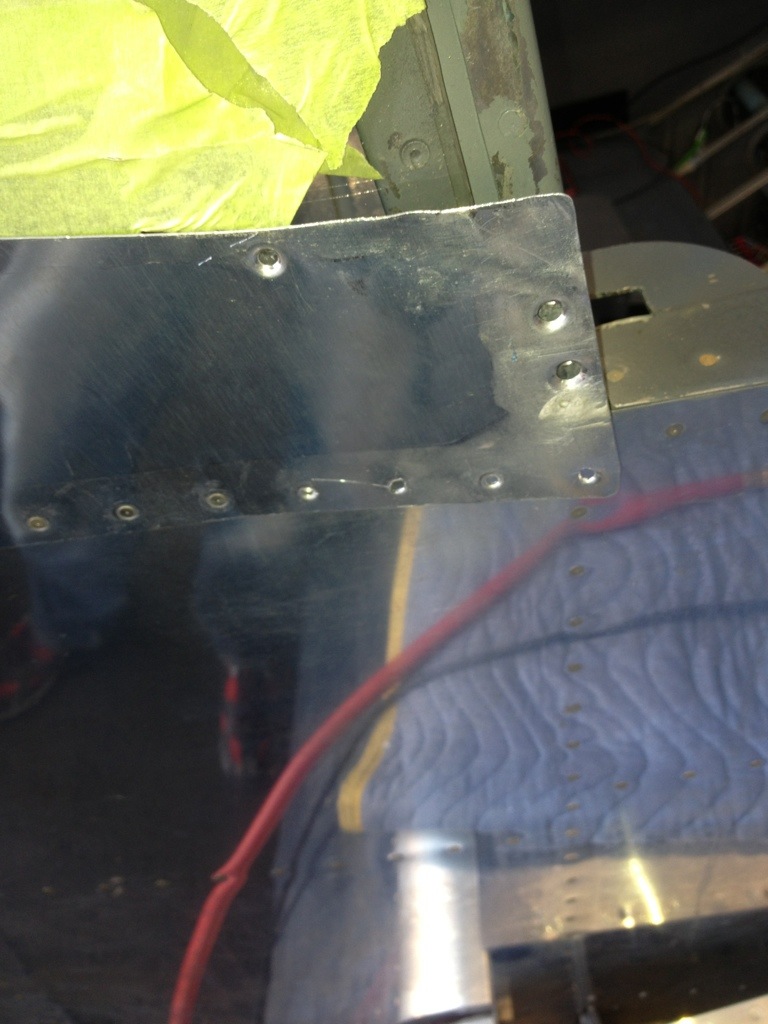
20130728-192738.jpgThat little corner of aluminum is the bane of my life.    Since I put the wings on, I’ve caught it on shoes, shirts, and finally, the belt on my jeans.   When this happens, it bends.   This time, I bent the crap out of it, so badly, that I had to remove the fasteners on the skin, peel it back, and hammer it flat again.  The light makes it look worse than it is, but it’s still pretty bad.   Fixed now, though.


20130728-192751.jpgThe day wasn’t all bad.   I got the fuel pump overflow plumbed.   I used some of the tubing I had from the MAP sensor install to create a flexible link between the output of the fuel pump to the hard line shown here.   The engine wiggles.  The aluminum tubing doesn’t.   I need a flexible line between the two.

20130728-192805.jpgThe fuel sensors concerned me for a minute.   When I connected the wings, I had some little extra wires that I thought I’d run for spares.   I guess this is why you label things.   After some pondering, I realized these were the fuel level sender wires.   Duh.  The good news is that I didn’t have to do any splicing and apparently I cut them to the right length.   A couple of connectors later and I had fuel level, which was, of course, zero.

No luck on the OAT sender though.   Either my EFIS or the probe is bunk.   OAT reads a steady 32 degrees F.  Have to contact MGL for a new one.

Crotch Strap Bracket part 2.

5 hours.

I’d been avoiding it, but today I worked on the right seat crotch strap bracket.   I did the left one before the airport move, and I really should have done this one at home too, but I had bigger fish to fry at the time.   Today I got the bracket drilled and deburred, and got 3 out of 4 platenuts on, but one will have to come off so I can enlarge the hole.  Slight misalignment, and  fixable.

I just have to fix that and pop-rivet it in.   This side was easier to deal with because there wasn’t a trim relay board in the way, although I did have to cut down the aft part to clear a wiring conduit.

I really wish these had been included in the kit, and I’d installed them before I wired everything.   C’est la vie.  Wot’ ever.